
Hyva vs Headless Magento 2: An Honest Performance Decision Guide
 By Sobhan Yaghoubi
There is a question that comes up on almost every Magento 2 performance engagement: should we migrate to Hyva, or rebuild the frontend as a headless storefront? Both paths will move your Lighthouse score. Neither is the automatic right answer. The actual decision depends on your traffic profile, your frontend team's capabilities, your budget, and how much architectural change your roadmap can absorb.
This guide gives you an honest framework. We will explain what each approach actually does to the rendering stack, where each one wins on real performance metrics, and how to make the call for your specific store — without overstating the case for either option.
What Hyva Actually Changes
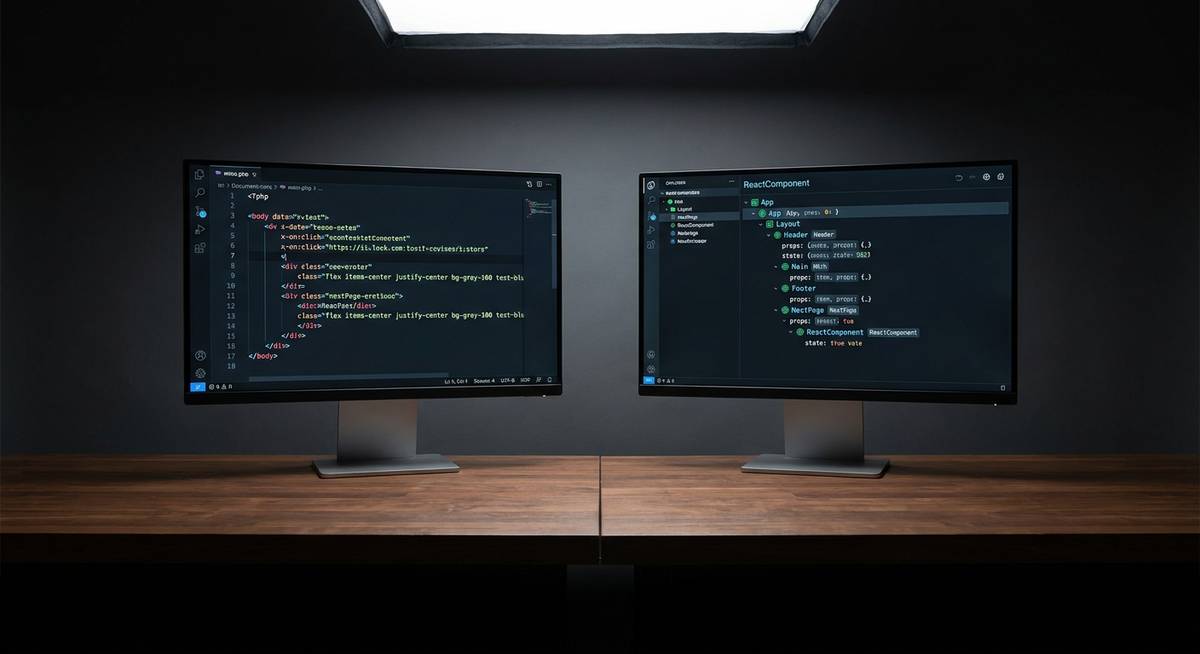
Luma's performance problem is well understood. The default Magento 2 theme ships RequireJS, jQuery, and Knockout.js as part of its core JavaScript stack. On a typical mid-market catalog, that stack can deliver hundreds of kilobytes of JavaScript before a single line of your custom code runs. The browser spends the first few seconds parsing and executing JS rather than rendering anything useful.
Hyva replaces that entire stack with Alpine.js and Tailwind CSS. Alpine is a fraction of the size of Knockout. Tailwind generates only the CSS classes you actually use. The result is a dramatically smaller payload delivered over the same server-side PHP rendering pipeline that Magento 2 has always used. You keep the Magento 2 admin, your catalog structure, your checkout, and your integrations. You swap out the frontend theme layer.
The practical outcome: Hyva migrations routinely push Lighthouse performance scores from the 40s and 50s into the 70s and higher, depending on server-side factors. The effort required is significantly less than a headless rebuild. A typical Hyva migration takes weeks, not months. Custom extensions need re-implementation because Luma-specific JavaScript components do not carry over, but the backend logic stays untouched.
For most mid-market Magento 2 stores — say, a B2C catalog doing several million dollars a year, running on a well-tuned cloud host, serving a primarily browser-based audience — Hyva is the right call. You get meaningful performance gains, you contain the project cost, and you stay on a familiar PHP-rendered architecture that your team can maintain without specialized React knowledge.
What Headless Actually Changes
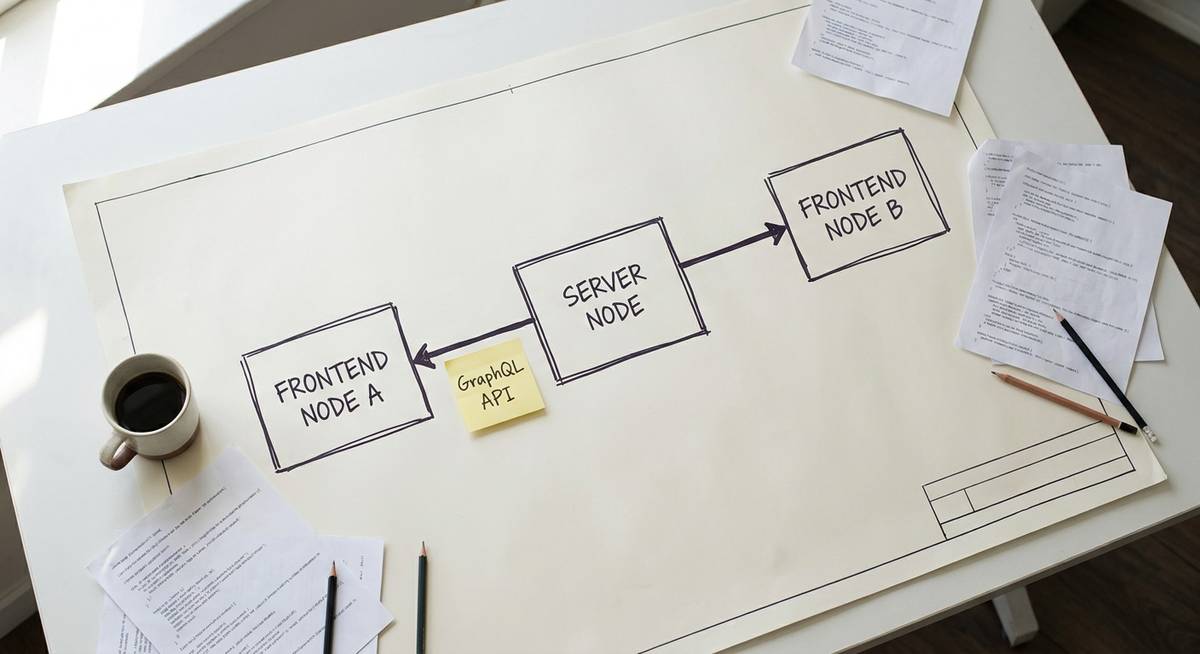
A headless build does something structurally different. It decouples the frontend entirely from Magento 2 and moves it to a separate Next.js application that communicates with Magento via GraphQL. The Next.js layer handles its own rendering — static generation, server-side rendering, incremental static regeneration — and can be deployed to a CDN edge network so that HTML is served from infrastructure physically close to the shopper, not from a single origin server.
This is where the performance ceiling shifts. Hyva still depends on a PHP request round-trip for every page. A well-configured headless storefront can serve pre-rendered HTML from edge cache in under 100ms globally. That is the mechanism behind sub-second Time to First Byte (TTFB) and the kind of Lighthouse scores that sit in the 90s consistently.
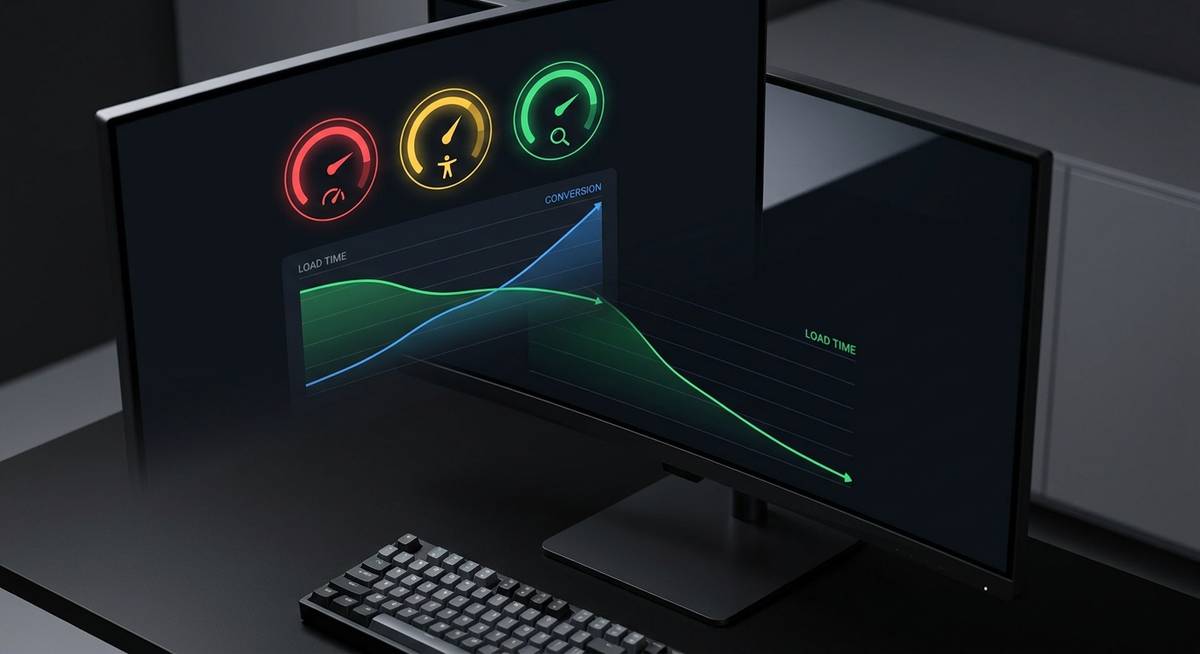
The Royal Reconstruction project is the clearest example in our own reference set. Their Magento 2 store ran on a Luma theme, scored 45 on Lighthouse, and took 8.2 seconds to load on mobile. We rebuilt the frontend as a Next.js headless storefront connected to the same Magento 2 backend via GraphQL. The backend — catalog, checkout, customer accounts, order management — was not replaced. Only the presentation layer changed. The result was a Lighthouse score of 96, a load time of 1.4 seconds, and a 34% lift in conversion rate.
That kind of result is achievable because of pre-rendering and edge delivery, not just because the JavaScript bundle is smaller. It also requires more upfront investment: a multi-month engagement timeline, GraphQL coverage planning, a separate deployment pipeline, and frontend developers who can work in React and Next.js. The ongoing maintenance model is also different — you are running two codebases, not one.
The Real Tradeoffs Side by Side
Complexity and timeline. Hyva is a theme migration. Headless is a re-architecture. A Hyva project can go live in several weeks for a mid-market store. A headless build is typically a multi-month engagement depending on catalog size, custom functionality, and integration scope.
Cost. Hyva migration costs are substantially lower than a headless rebuild. If your current Lighthouse score is in the 55–70 range and your business goals do not require sub-second TTFB or an app-like UX, spending the extra budget on a headless build does not produce a proportionate return.
Performance ceiling. Both approaches will improve your score. Hyva will get you into the 70–85 range reliably, sometimes higher. Headless — when built with proper pre-rendering and edge delivery — can reach and hold 90+. On our headless builds we enforce a Lighthouse CI gate on every pull request to guarantee that the 90%+ score is maintained as the codebase evolves, not just at launch.
Frontend flexibility. Hyva gives you a performant PHP-rendered theme with a conventional Magento component model. Headless gives you a React application — you can build any UX pattern, integrate any third-party JS library without Magento's module system, and ship features that would be architecturally difficult in a server-rendered theme.
Omnichannel and PWA. If you are serving the same catalog to a web storefront, a mobile app, a kiosk, or a B2B portal, headless is the right architectural choice. The Magento 2 GraphQL API becomes a single data layer that any frontend can consume. Hyva is a web theme — it does not extend to non-browser surfaces.
Team capability. Hyva runs on PHP, Tailwind, and Alpine. Most Magento 2 development teams can maintain it. Headless requires React and Next.js expertise. If your in-house team does not have those skills, factor in either training or ongoing agency support as a line item in the total cost of ownership.
Choose Hyva If
- Your current Lighthouse score is below 60 and you need a meaningful improvement without re-architecting.
- Your store is a single web channel — no mobile app, no kiosk, no headless API consumers planned.
- Your budget favors a contained project with a fast timeline.
- Your development team works in PHP and Magento 2 — Hyva fits that skill set.
- Your UX requirements are met by conventional theme-based patterns.
Choose Headless If
- You need sub-second TTFB and Lighthouse scores consistently above 90 — for peak traffic events like Black Friday / Cyber Monday, or because your category is highly competitive on Core Web Vitals.
- You are building or planning a PWA, a mobile app, or any non-browser frontend that needs to share the same product and checkout data.
- You need a fully custom frontend that is not constrained by Magento's theme component model.
- Your conversion data shows that mobile performance is directly limiting revenue — the Royal Creation result (8.2s to 1.4s, +34% conversion) is the kind of outcome that only edge-delivered pre-rendering produces at scale.
- You are an enterprise account planning a long-term frontend roadmap where composable architecture matters.
One Backend, Two Valid Paths
It is worth being explicit about what does not change in either scenario. The Magento 2 backend — your product catalog, pricing rules, promotions engine, checkout, order management, customer accounts, and integrations — stays in place. You are not choosing between two commerce platforms. You are choosing the rendering architecture for your storefront. That means both paths are lower-risk than a platform migration, and both can be phased if your team prefers a staged rollout.
If you are currently on Luma and every day of inaction is costing you performance, Hyva is an immediately actionable improvement. If you are already on Hyva and your scores have plateaued in the mid-70s while your conversion analytics point at mobile load time as a friction point, headless is the next logical step — not a lateral move.
How to Determine Which Path Fits Your Store
The honest answer is that the right choice depends on data you may not have in front of you right now: your current Lighthouse baseline by device and page type, your TTFB by geography, your mobile conversion funnel, and your roadmap for the next 18 months. A performance audit pulls all of that together and gives you a quantified case for one path or the other — before any budget is committed.
Vesta-Web has been doing this work since 2018. Our team of 20+ Adobe Commerce-certified developers has run this exact analysis for stores across the USA, Canada, and Europe. If you are at this decision point, the most useful next step is a free audit of your current store — Lighthouse baseline, Core Web Vitals by page type, and a written recommendation on which path is justified by the numbers.
You can request a free performance audit and a no-commitment quote at vesta-web.com/contact. We will tell you honestly whether Hyva is the right call or whether the data points to headless — and if it is headless, we will show you what the Royal Creation result looks like mapped to your store's current metrics.

Ready to Transform Your Store?
Get a free performance audit from our certified Magento 2 team.
Get a Free QuoteMore Articles

Sat Jul 11 2026 · 14
What Does Headless Magento 2 Cost? A Realistic Breakdown

Mon Jun 29 2026 · 11
Magento 2 Lighthouse Score: 45 to 96 (A Real Case Study)

Sat Jun 27 2026 · 6
Headless Magento 2 Explained: What Decoupling the Frontend Actually Does

Sat Jun 27 2026 · 7
The Pre-BFCM Performance Checklist for Magento 2 Stores

Thu May 28 2026 · 8